Cruise life · A first-timer’s guide
What Are Cruise Ducks? A Beginner’s Guide
Cruise ducks are little rubber ducks that passengers hide for other people to find aboard a cruise ship. They often come with a tag telling you where they traveled from and inviting you to keep them or hide them again. It’s a small surprise someone has left for you to enjoy.
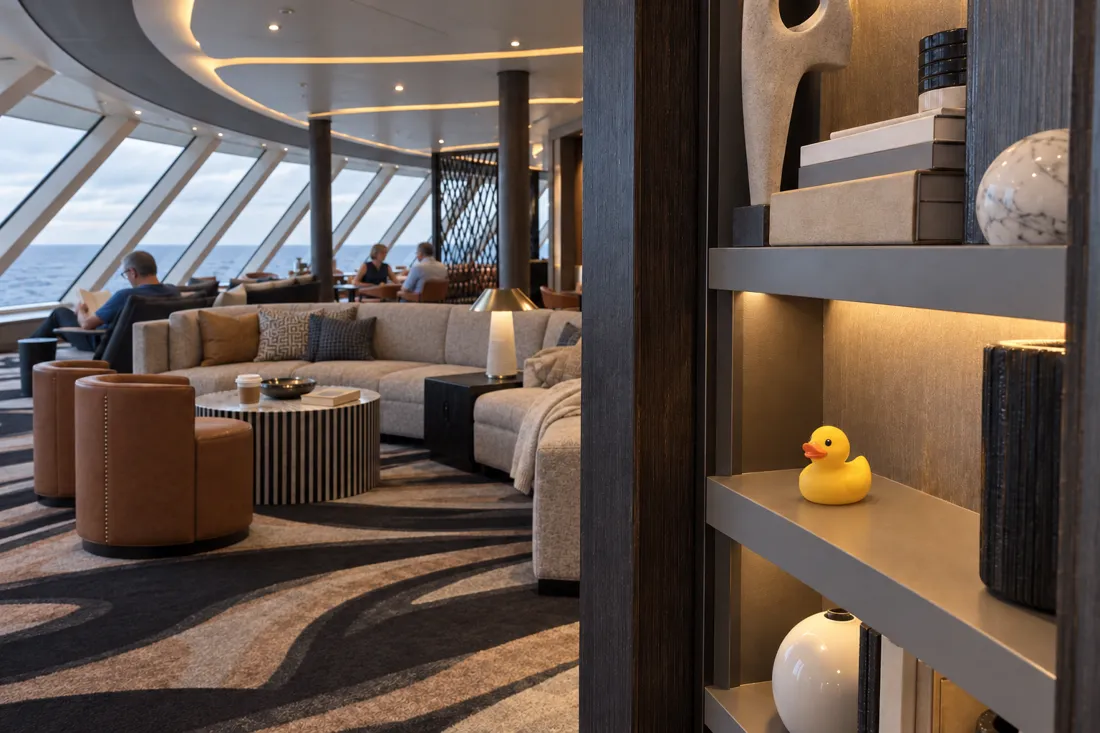
The first one we spotted was tucked into a cubby outside Los Lobos, the Mexican restaurant aboard Norwegian Prima. Josh and I were taking our first real vacation together after years of being together. I’d heard ducks were a thing. This was the proof.
We thought it was cute and special, but we hadn’t brought any to hide. Somehow, that made us feel like we shouldn’t take the ones we found.
The following year, we came back with our two kids and 25 ducks of our own. There are a few things I wish we’d understood before either trip.
How to join a cruise duck hunt
Start by checking your cruise line’s guidance on duck hiding before you sail. Where it’s permitted, you can join in by finding ducks, hiding them, or doing both. You don’t need to bring a bag of ducks to enjoy finding one.
When you spot a duck, check that it’s been left for the hunt. A tag is helpful here. Someone’s collection arranged with their belongings is different from a duck with a “keep or rehide” invitation.
Read the tag before you decide what to do. If you want to keep it, you’ve found yourself a little souvenir. If you’d like someone else to have that same surprise, rehide it somewhere appropriate, provided your ship allows it. You can also enjoy spotting it and leave it for the next person.
Turns out, we’re keepers. Especially where our young son was concerned. Expecting him to let go of one of his new friends just wasn’t going to happen, so our finds came home with us.

What to pack if you want to hide ducks
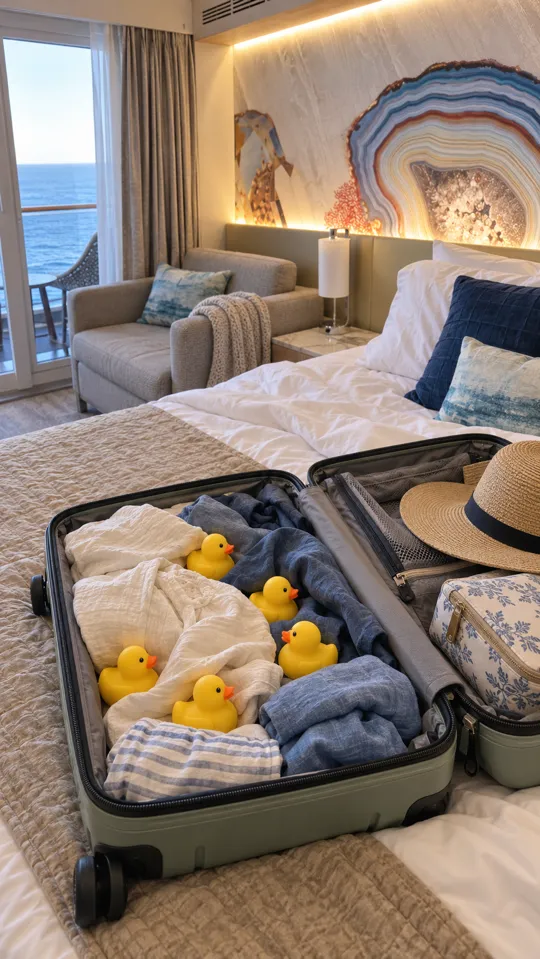
Illustrative cruise scene.
Keep your first batch manageable. We brought 25, and they went quickly. Next time, I’d bring about a dozen of my favorites. There’s no need to turn your suitcase into a duck warehouse.
For a simple setup, pack your ducks, tags if you want to add them, and a way to attach the tags securely. A small paper or cardstock tag tied with a short ribbon is enough. Choose ducks appropriate for the people likely to find them, and skip loose decorations that could fall off. Have everything assembled before you leave.
That last part is advice from someone who made it an entire Pinterest project the night before our trip. It sounded considerably more fun when I was planning it. Because doesn’t everyone wait until the night before leaving to start a DIY craft?
Your tags can be simple. Ours said something along these lines:
“Oh what luck, you found a duck! I traveled all the way from Western Slope Colorado to be on the NCL Prima. Keep or rehide, you decide.”
We included our sail date, too. A hometown or region, ship name, and a short message give your duck a little story. Leave your cabin number, home address, and other private details off the tag.
I hadn’t expected the Colorado part to matter so much. We live in a small town on the Western Slope, and those tags started conversations with people who knew exactly where we were from. A little detail on a duck gave us something to talk about.
Sort out your supplies and check the ship’s guidance before boarding. Once you’re aboard, internet access may be limited. I’d rather have everything ready and spend less of my vacation researching on my phone.
Are cruise ducks allowed on every ship?
Check your own cruise line before packing. Seeing ducks in someone else’s vacation photos doesn’t tell you what your ship currently allows.
Cruise lines have published different guidance. Carnival’s own packing article includes rubber ducks to hide onboard. A planDisney answer published in April 2025 says Disney Cruise Line guests may not hide items such as ducks in staterooms or public areas. Confirm the current guidance for your sailing and follow directions from the crew.
We had an experience that made this part feel very real. When our son started hiding ducks in the main lounge near the theater, he was nervous. We followed closely, took videos, and applauded his choices of hiding spots. We did what proud parents do.
What I didn’t see was a crew member gathering one of our ducks and throwing it away. Josh saw it and told me later. I was sad about the time and plastic going into the bin, and glad our son hadn’t seen one of his ducks being thrown away.
We don’t know why it was removed. Crew members have work to do, and something we leave for fun can create extra cleanup for them. Our experience on that earlier sailing isn’t a statement of Norwegian’s current policy.
Where to hide a cruise duck
Where hiding is permitted, choose somewhere a person can spot and reach the duck without disrupting anyone or moving the ship’s belongings. In an approved public lounge, an open shelf at a reachable height can be a good starting point. Keep the duck visible enough that people won’t rummage through anything. For a young child, finding a duck in plain sight can be plenty exciting.
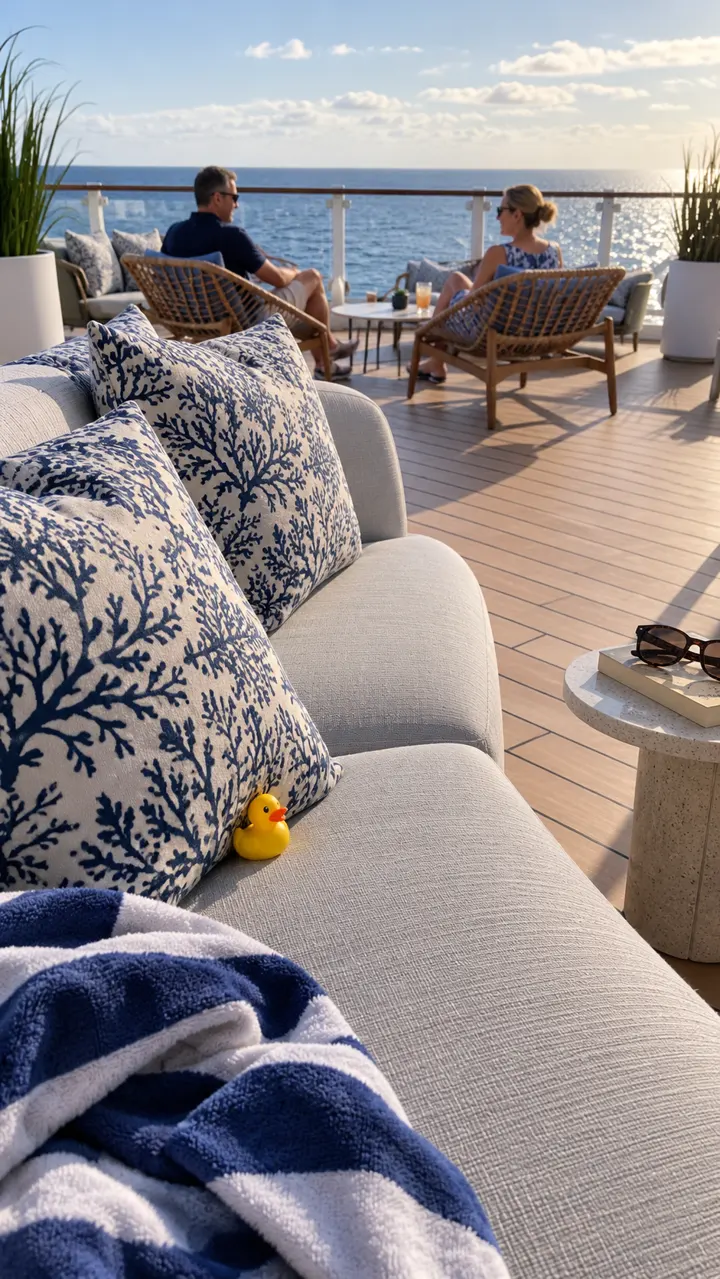
These are the practical boundaries I’d use alongside the ship’s own instructions:
- Keep ducks away from railings, open edges, or anywhere they could fall or blow overboard.
- Leave pools, hot tubs, food service areas, shops, and crew-only spaces out of the hunt.
- Keep walkways, stairs, handrails, doors, and safety equipment clear.
- Avoid places that require climbing, reaching into equipment, moving decorations, or disturbing someone’s belongings.
- Stay with young children and make the hunt easy for them to enjoy.
If you’re unsure about a spot, ask the crew or choose another one. And if you’re finding several ducks, consider leaving some for other people to discover. We loved bringing ours home, but someone else may still be hoping to find their first.
Adults get to enjoy this too
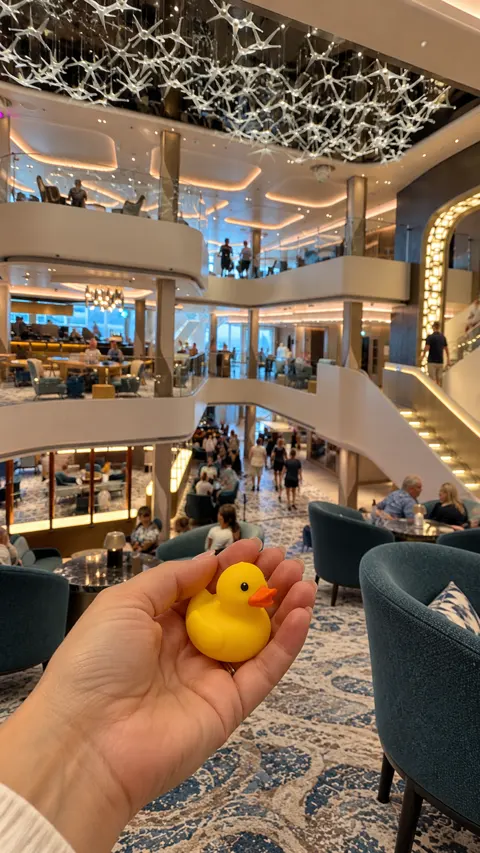
I wish someone had told me sooner that we didn’t have to be too cool for school about the duck hunt. We enjoyed it ourselves. So did other adults we met.
One of my favorite moments happened while we were sitting in the Starbucks coffee area. Our three-year-old hid a duck in plain sight, then guided a little girl over so she could find it.
They were both too young and shy to really know how to make an introduction. He’d found a way to do it anyway.
Kindness in that moment needed no words.
It didn’t matter where we, or the ducks, were from. Our kids and the watching parents were brought together by a rubber duck.
That’s what I enjoy about it. An unexpected little moment of happiness during a vacation that already means something to you. A reason to speak to someone you might otherwise have walked past.
From our family to yours
Keeping the hunt going with Paddo
Once our 25 ducks were gone, we still wanted to hide more. We wanted to keep the ones our son had found, too. And when we went home to Colorado, we missed the fun of it.
That feeling led Josh and me to create Paddo.
Paddo is a digital duck hunt that lets you hide and find digital ducks on supported cruises and on land. You place a duck for other players to find, add a personalized message, and get notified when it’s found. Your digital collection stays in the Paddo app, and you can keep playing back home.
Before you sail, check supported cruise setup and plan for connectivity. Our Paddo FAQ is a good place to start.
You don’t have to buy, pack, or tag physical ducks to use it. That also means there’s no physical duck left behind to be cleared away or accidentally end up overboard. Choose appropriate places to play and follow the rules of the ship or place you’re visiting.
I still want to bring a dozen favorite physical ducks on our next trip. I’d give them tags with a QR code inviting people to Paddo, so when their own bag runs out, or they’re back home missing the cruise, they know they can keep hiding and finding.
If that sounds like your kind of fun, come see how Paddo works. We’re a family in landlocked Colorado, and we weren’t quite finished with the duck hunt.
See how Paddo worksIllustrative imagery created for this guide. These scenes are not photographs from our family’s sailing.